
MOT Checklist: What to Check Before Your MOT Test
Your MOT is approaching. You’ve booked the appointment – but have you checked your car?
A faulty bulb, worn wiper blade or damaged tyre could be easy to overlook during everyday driving. Spotting a problem early gives you time to arrange a replacement or repair before test day.
You won’t be able to identify every MOT fault at home. But this pre-MOT checklist will help you work through some simple checks and understand where Cataclean can fit into your preparation.
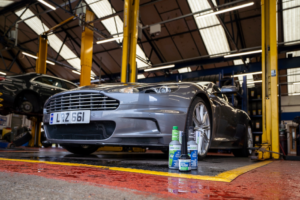
Figure 1 Cataclean Hybrid, Petrol and Diesel fuel and exhaust system cleaners.
What’s in this guide?
- What an MOT checks
- Six checks to complete before your appointment
- How Cataclean can help with emissions preparation
- What to do next
What does an MOT test check?
An MOT checks whether important parts of your vehicle meet the required road safety and environmental standards.
These include your lights, tyres, brakes, windscreen, seat belts, exhaust system and emissions.
An MOT is not the same as a service. Regular servicing remains important, even when your vehicle passes.
- Check your lights
You might not notice a faulty light from the driver’s seat. Ask someone to stand outside the car while you test them.
Work through the following:
- Headlights, including dipped and main beam
- Indicators and hazard lights
- Brake lights
- Fog lights
- Reversing lights
- Rear number plate lights
- Side lights
Check the light covers too. They should be clean, secure and free from serious damage.
Your next step: Replace failed bulbs or arrange a repair if a light still doesn’t work.
- Inspect your tyres
Your tyres affect how your vehicle grips the road, steers and brakes. Give each one a close look before your MOT.
Check for:
- Cuts, cracks or bulges
- Object stuck in the rubber
- Insufficient tread depth
- Uneven wear
- Incorrect tyre pressure
- Different tyre sizes on the same axle
For cars, the legal minimum tread depth is 1.6mm across the central three-quarters of the tread and around the entire circumference. Use a tread-depth gauge to check several points around each tyre.
Check that both tyres on each axle, the two front tyres or the two rear tyres, are the same size. Some cars have different sizes at the front and rear as part of their manufacturer-approved setup. If unsure, check your vehicle handbook or ask a tyre specialist. Different sizes on the same acle can cause an MOT failure.
Use the tyre pressures recommended in your vehicle handbook or tyre-pressure label.
Uneven wear could point to incorrect pressure, poor wheel alignment or a suspension problem.
Your next step: If you’re unsure whether a tyre is safe or legal, have it inspected by a specialist.
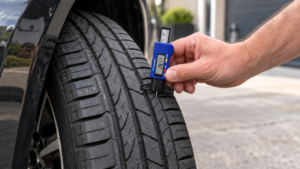
Figure 2 Checking tyre tread depth with a digital gauge before an MOT.
- Test your windscreen, wipers and washers
A clear view of the road is essential. Check these three areas together:
- Windscreen: Look for chips or cracks, particularly directly in front of the driver.
- Wipers: Make sure they clear the glass properly without leaving large streaks.
- Washers: Top up the screen wash and check that the jets reach the windscreen
- Horn: Give it a brief press to check that it works and sounds clearly.
Your next step: Replace worn wiper blades, get advice about windscreen damage and arrange a repair if your washers or horn do not work.
- Pay attention to warning lights
Some dashboard warning lights appear briefly when you start your car. If a warning stays on, it may need attention.
If your engine management, airbag, ABS, or electronic stability control light remains illuminated, arrange for the fault to be diagnosed
If your tyre-pressure warning light (TPMS) stays on or flashes, check your vehicle handbook and tyre pressures. If the warning continues after correcting the pressures, have the system checked by a garage.
Clearing a warning light does not repair the underlying problem.
Your next step: Check your vehicle handbook and have persistent fault warnings investigated.
- Listen to your brakes and exhaust
Your car may already be giving you clues that something needs attention.
When braking, look out for:
- Grinding or unusual squealing
- Vibration
- Pulling to one side
Check that the handbrake holds the vehicle securely.
For the exhaust, pay attention to excessive noise, rattling, blowing, heavy smoke or unusual fumes.
Your next step: Have these symptoms checked by a qualified professional before your MOT.
- Complete your final checks
Before your appointment, work through these often-overlooked items
- Doors open, close and latch securely.
- Seat belts fasten, release and retract correctly, without serious damage.
- Mirrors are secure and give you a clear view.
- Number plates are clean, correctly fitted and easy to read.
- Engine oil, coolant, brake fluid and screen wash levels have been checked according to your vehicle handbook.
Never open the coolant cap while the engine is hot, as hot liquid and steam can spray out and cause serious burns. Let the engine cool fully before checking.
How can Cataclean help before an MOT?
Your vehicle’s emissions are another part of MOT preparation.
Carbon, resin and gum deposits can build up within the fuel and exhaust systems over time. Harmful carbon build-up can cause problems that you can’t see, impacting component efficiency resulting in higher emissions.
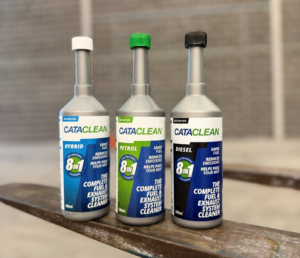
Figure 3 Cataclean Hybrid, Petrol and Diesel fuel and exhaust system cleaners.
Cataclean is designed to remove deposits, pre-combustion and post-combustion components. It can be a useful addition to emissions preparation alongside servicing, vehicle checks and any necessary repairs.
How to use Cataclean
For a standard 500ml treatment:
- Add the product to approximately a quarter tank of fuel, around 15 litres.
- Drive for at least 15 to 20 minutes
- Refuel when required
Always follow the directions on your bottle and choose the correct product for your vehicle.
Cataclean does not guarantee an MOT pass. It cannot repair broken, damaged or heavily worn components. Known safety or mechanical faults should be inspected by a qualifying professional.

Conclusion
Preparing for your MOT starts with a few simple checks. Your lights, tyres, wipers and warning lights are a good place to begin. Spotting a problem early gives you more time to get it fixed before your appointment.
Cataclean may also help with emissions preparation where carbon build-up is contributing to the problem. Use it alongside regular servicing and any necessary repairs, remembering that no additive can guarantee an MOT pass.
Don’t leave your preparation until test day. Work through the checklist now and give yourself one less thing to worry about.
Not sure when your MOT is due? Check the expiry date using the official GOV.UK service.
What do you always check before your MOT? Let us know in the comments.